AGU
AGU


 Russian
 English
ASU News
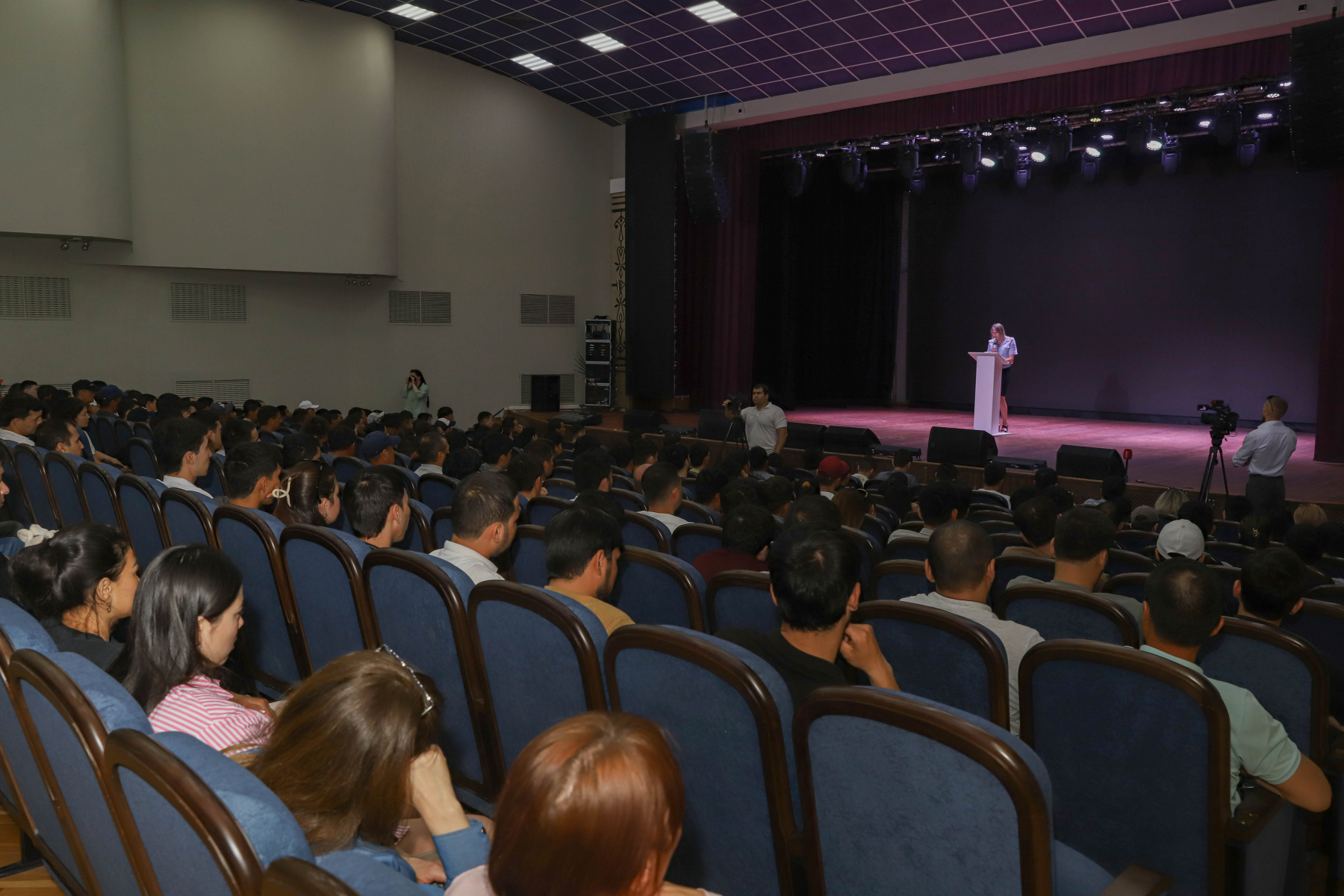
A lecture titled "Assistance for the Adaptation of Migrant Workers Arriving in the Russian Federation Visa-Free, as well as Citizens of EAEU Member States" was conducted at Adyghe State University. The event was organized by the Committee of the Republic of Adygea for Nationalities, Relations with Compatriots, and the Media, in collaboration with the Migration Department of the Ministry of Internal Affairs of the Republic of Adygea.
Susanna Tlekhatuk, Vice-Rector for International Affairs, addressed the attendees on behalf of the university leadership. In her speech, she highlighted the importance of initiatives aimed at facilitating the integration of foreign nationals, emphasizing their vital role in fostering harmonious relations within Russia’s diverse society. Adyghe State University regularly hosts such events, actively involving students in academic, cultural, and athletic activities to promote intercultural understanding and cooperation.
Officers from the Ministry of Internal Affairs for the Republic of Adygea helped foreign citizens attending the lecture understand the legal intricacies of living, studying, and working in Russia. Police Major Kristina Novoseletskaya spoke on behalf of the Migration Department of the Ministry of Internal Affairs for the Republic of Adygea. She discussed changes to federal legislation regarding the legal status of foreign citizens in the Russian Federation. She emphasized the importance of adhering to the deadlines for registering at the place of residence of foreign citizens and the obligation to undergo state fingerprinting, photographing, and medical examination. She also touched on the issue of entry bans to Russia, which are imposed on violators of immigration laws as an administrative penalty.
Dariet Kalashaova, a lecturer at the Adyghe regional branch of the Russian Society "Knowledge" and the deputy chair of the same organization in the region, delivered a lecture on the adaptation and integration of foreign citizens into Russian society. The presentation covered both federal and regional perspectives, taking into account the diverse ages, professions, nationalities, cultural backgrounds, and other characteristics of foreigners.
These meetings are organized to assist migrant workers in understanding and adopting the behavioral patterns, social norms, values, knowledge, and skills essential for successful life and work in Russia. Such events also facilitate the effective integration of foreigners into the social, legal, and cultural systems of the host society as full and active members.